

Service@mrdvs.com
+86 13370882355

V2 Pro RTLS

See Every Pallet, Track Every Forklift.

See Every Pallet
Track Every Forklift

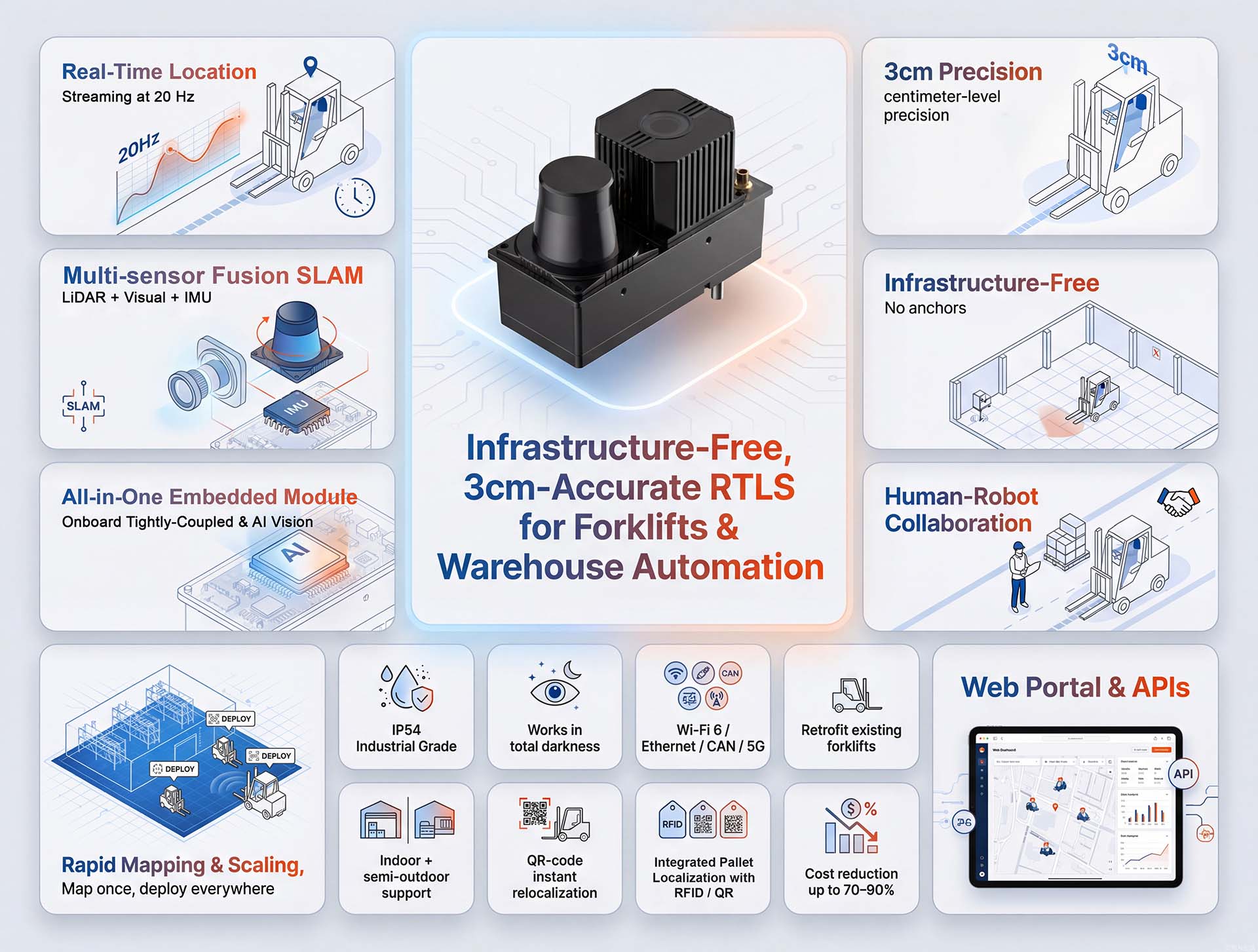
The Infrastructure-Free, 3cm Precision RTLS for Manual Forklifts. Turn Any Manual Forklift into a Real-Time Trackable Asset.
V2 Pro Forklift RTLS

True Plug-and-Play RTLS
Zero Infrastructure Required

Skip months of installation and millions in costs.
Turn your existing forklifts into intelligent assets without changing your facility.

Deploy in Days, Not Months

Reduce Costs by 90%

Adaptable to Any Environment

Sensor Fusion Architecture
Designed for Reliability

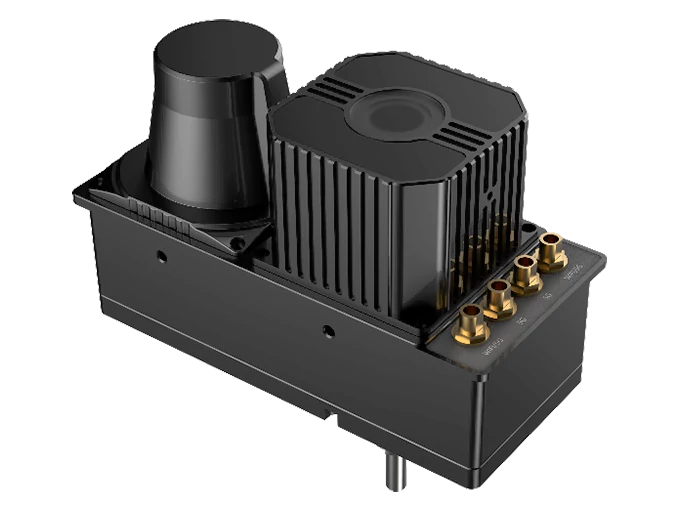
V2 Pro combines 2D LiDAR, vision, and IMU data in a purpose-built system
to deliver stable, high-precision localization in real-world environments.

Lidar icon

Three-sensor integration

Edge Computing

Onboard Edge Computing

Unwavering Accuracy

Centimeter-Level Accuracy

All Condition Visibility

Reliable in Real World

Technical Specs Highlight

Discover the V2 Pro Advantage. Learn how our all-in-one, infrastructure-free solution delivers precise, real-time tracking with reliable performance for modern warehouse automation.

V2 Pro Bento Grid Neo
Repeatable Accuracy
Repeatable Accuracy
± 0 cm
Update Rate
Update Rate
0 Hz
Relocalization Time
Relocalization Time
0 s
Max Ceiling Height
Max Ceiling Height
0 m

From Unboxing to Tracking in Minutes

Intelligent Web Portal & APIs

Zero-Code Mapping Suite

Centralized Fleet Management

Developer-Friendly

Flexibility & Resilience

v2 pro rtls Instant Recovery Relocalization0206

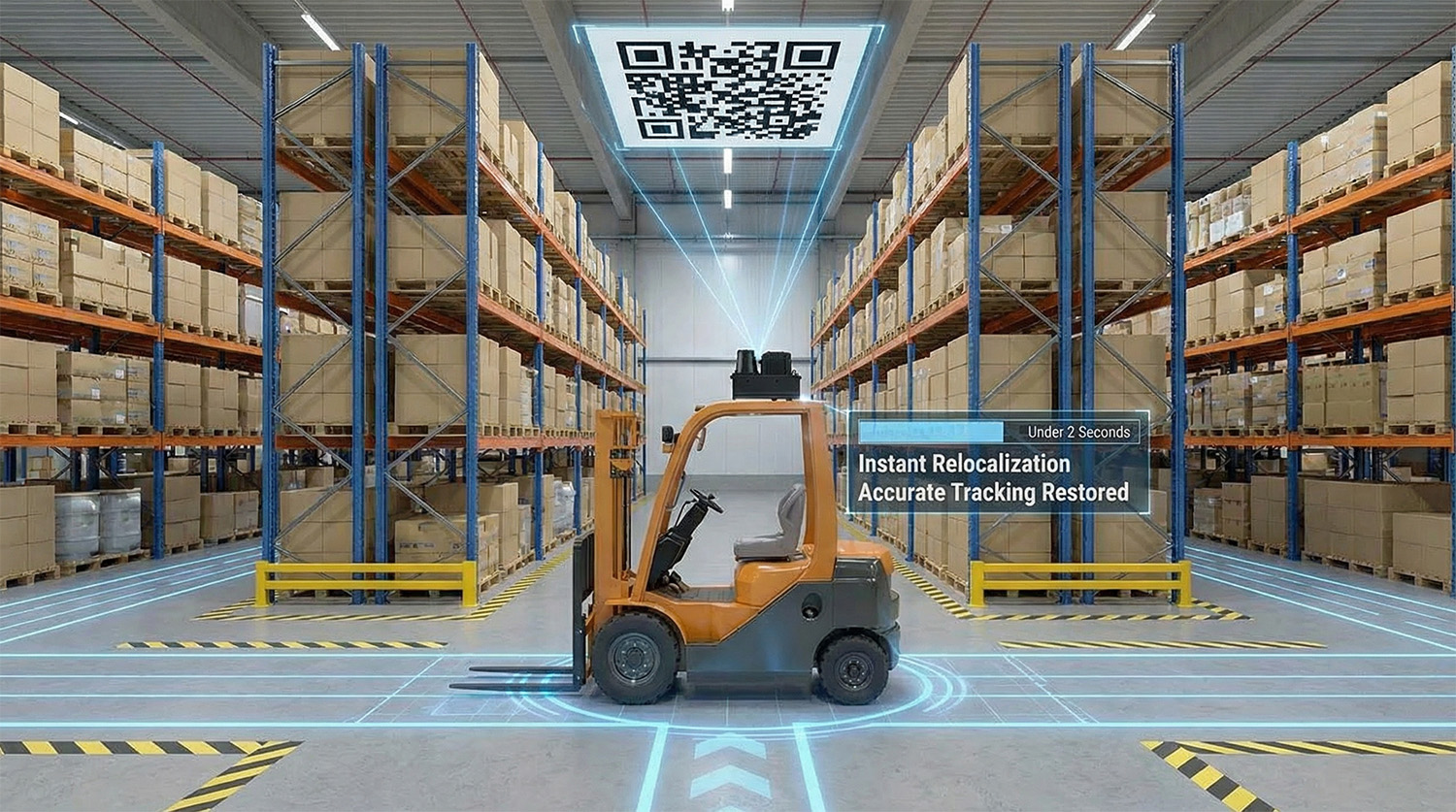
Instant Relocalization

V2 Pro Unified Location ID

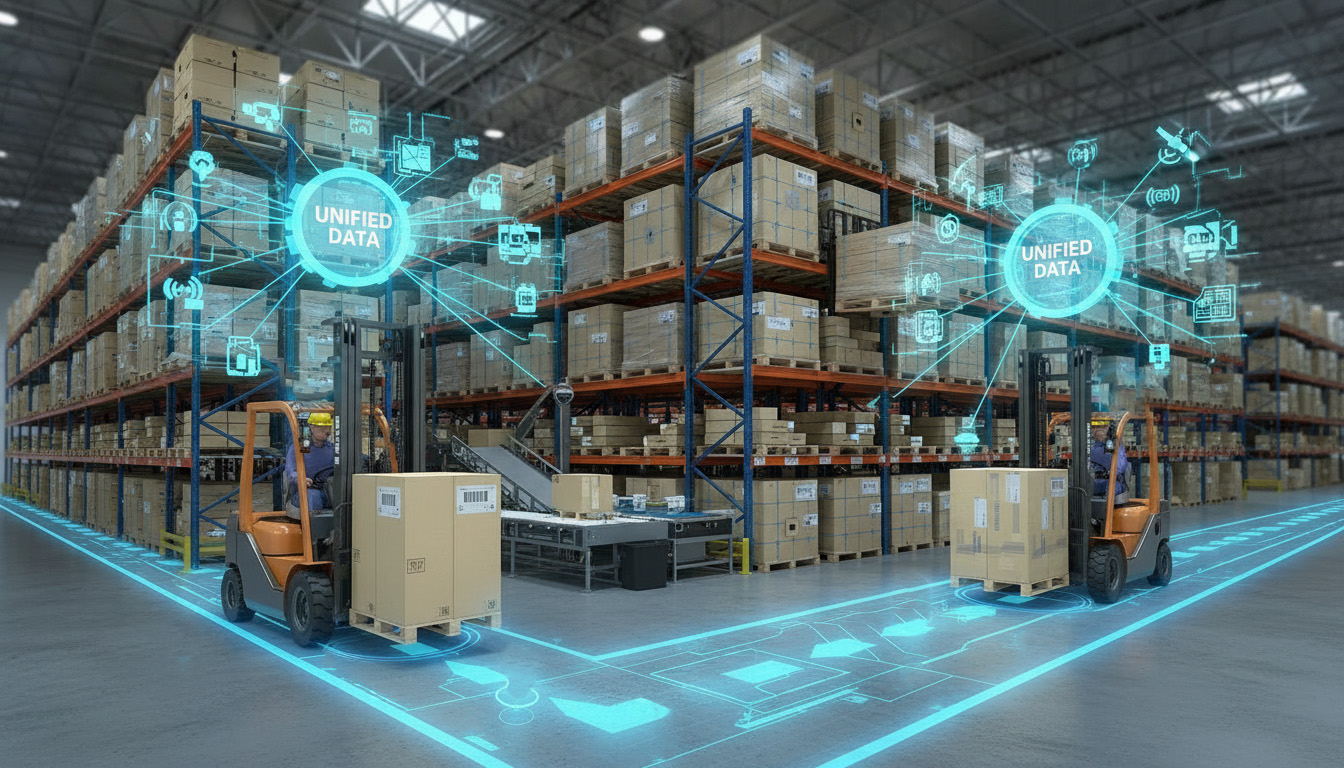
Unified Location ID

Seamless Indoor Outdoor Transition0206

Seamless In-Outdoor

Resource Download

More Than an Upgrade - A New Strategy

We learned that breakthrough innovation often means simplifying, not complicating. Our platform empowers you to build a system that works for your specific operational and financial realities.

“True innovation doesn’t always mean ‘more.’ Sometimes, it’s about creating a flexible foundation that allows our customers to do what works best for them.”

Global Support, Local Expertise

Our certified and expertly trained partners deliver localized solutions. They ensure the successful deployment of the V2 Pro to provide precise location data for AGVs and manned industrial fleets, facilitate the automation retrofit of existing vehicles, and enable advanced applications such as real-time safety alerts and digital twin creation.

SleuthX
SleuthX
Spain
Industrial IoT Integration, Real-Time Location Systems (RTLS), Southern European Market
GTP Automation
GTP Automation
Brazil
Logistics 4.0, Warehouse Automation, Real-Time Location Systems (RTLS), South American Market
SleuthX
SleuthX
Singapore
Singapore-Based Robotics SaaS,WMS/FMS & Robotics Integration, SEA & India Market

What our Clients have to say

After evaluating several competing systems, we selected this solution for intensive field validation. The reliability it demonstrated under complex, real-world operational conditions gave us full confidence to integrate it as a foundational component of our warehouse automation blueprint.
sleuthx logo
Juan Carlos
COO of SleuthX
Uncompromising Reliability in Real-World Logistics" The V2 Pro's multi-sensor fusion delivered seamless mapping and 3cm accuracy at our facility. It remained perfectly stable during high-speed maneuvers and lifting operations. A robust, ready-to-deploy solution that effectively bridges manual forklift tracking with digital fleet management in demanding environments.
Gensurv Robotics logo
Yusen Logistics
Gensurv Robotics

Frequently Asked Question

What is Fusion-SLAM™? Is the algorithm open-sourced?

Fusion-SLAM™ is our fully proprietary and patented core technology. It originated from fundamental research in visual perception and deep learning, led by our co-founder, Dr. Xuanhao Zhou. Through over a decade of dedicated in-house R&D, the technology has been rigorously refined and validated across hundreds of real-world deployments, most notably serving as the core positioning engine for AMRs and automated forklifts within our parent company, Lanxin Robotics.

This same, field-proven core now powers the MRDVS V2 Pro module. It achieves tightly-coupled sensor fusion of 2D LiDAR, visual ceiling features, and IMU data. Powered by our domain-trained deep learning models, it delivers centimeter-level absolute positioning that is significantly more stable and reliable than single-sensor solutions.

We have now productized this industrial-grade robustness into the V2 Pro, a self-contained hardware module, making it directly available for retrofitting manual forklifts and enabling AGV conversions. This brings proven, reliable autonomy to a wider range of vehicles and industrial applications.

The algorithm is not open-sourced and remains a key part of our intellectual property portfolio, ensuring continuous innovation and reliable performance for our customers.

What is the key advantage over traditional UWB systems?

Our solution offers three fundamental advantages over conventional systems:

  1. Marker-Free Core & Rapid Deployment: At its core, the system requires no pre-installed markers, beacons, or infrastructure (e.g., UWB anchors, reflector walls), and enabling deployment in days rather than weeks. For scenarios where customers prefer an additional safeguard for rapid re-localization, a limited number of QR codes can be optionally deployed without compromising the system’s fundamental infrastructure-free advantage.

  2. Radically Different & Scalable Cost Model: Unlike UWB systems whose cost scales with warehouse area (requiring extensive anchor networks that can cost hundreds of thousands of USD for large sites), our solution scales primarily with the number of vehicles. This translates to dramatically lower upfront investment and far more predictable, linear cost scaling for large-scale or expanding operations.
  3. Proven Robustness in LiDAR-Degraded Environments: Unlike systems reliant on 2D LiDAR or VSLAM alone, our Fusion-SLAM™ technology ensures stable, centimeter-accurate operation in challenging conditions – including steel structures, open spaces, dynamic storage floors, and high-traffic aisles – through tight fusion of ceiling vision and inertial data.
Does the system suffer from positioning drift over time or distance?

No. The system uses absolute SLAM based on natural features, not relative wheel odometry. This eliminates cumulative drift entirely. There is no need for periodic manual correction – it provides stable, drift-free positioning in the global map.

What are the operating height range, accuracy, and LiDAR specifications?

The system is designed for optimal performance within ceiling heights up to 15 meters, which is the effective range for the visual component to ensure robust, feature-rich localization. Within this range, positioning accuracy is ±1-3 cm and remains within ±4 cm at 15 meters.

The integrated 2D LiDAR supports this with a maximum detection range of up to 40 meters for high-reflectivity (90%) targets, and about 15 meters for standard low-reflectivity (10%) targets, providing reliable planar mapping data as part of the Fusion-SLAM™ solution.

A comprehensive set of hardware parameters and environmental tolerances is provided in Appendix A: V2 Pro Hardware Specification.

How does the system recover positioning if it's lost due to movement or shutdown?

The fastest and most reliable method is visual re-localization using AprilTag QR codes, which can be deployed on ceilings, walls, or columns. If the vehicle is moved while off (e.g., towed to a new bay), simply drive it to any pre-deployed QR code in the facility. The onboard camera will scan the code, and the system will re-establish its exact position within 2 seconds, resuming normal operation instantly. For reliable scanning, ensure the QR code size is appropriate for the viewing distance (a general rule is that the code‘s side length should be at least 10 times the height difference in meters). We recommend deploying multiple unique codes at key areas (e.g., dock doors, zone entries) for optimal coverage.

Can the system be used outdoors?

The system is primarily designed for precise indoor positioning. Its suitability for outdoor use depends entirely on your specific operational requirements, which can be categorized into two main scenarios:

Scenario 1: If outdoor positioning is not required
This is typical for workflows where goods are handled indoors and vehicles only move between buildings without needing real-time outdoor localization. The standard indoor solution is fully sufficient. The vehicle relocalizes accurately upon entering each building by scanning a QR code mounted at the entrance (on a wall or ceiling), enabling precise indoor navigation thereafter.

Scenario 2: If continuous and reliable outdoor positioning is needed
For operations requiring robust outdoor localization, the system offers configurable solutions tailored to the environment.

In semistructured areas with clear boundaries – such as loading bays, covered docks, inbound yards with buildings spaced within a few meters, or enclosed walkways (which function like indoor spaces due to overhead cover) – the integrated 2D LiDAR + IMU configuration delivers reliable performance.
For open, feature – sparse areas (e.g., large yards, parking lots), we recommend integrating an external GPS or RTK module to ensure precise, largescale positioning.

Will layout changes require re-mapping?
We suggest mapping before placing bulk storage (e.g., ground stacks) and goods in fast-changing storage areas – especially bulk storage zones. Our Fusion-SLAM™ RTLS solution primarily uses fixed environmental features (e.g., pillars, ceiling lights, pipes, or wall ribs) for localization. Once mapping is complete, subsequent changes to bulk storage goods (e.g., additions/removals) do not require re-mapping.
Do I need to re-map if the vehicle model is changed?
Yes. Remapping is recommended when changing vehicle models, as differences in roof height and structural obstructions can affect the V2 Pro module‘s viewing perspective and detection stability. Performing separate mapping for each model ensures the map matches the vehicle’s physical configuration, maintaining reliable and accurate localization.
Do I need to create separate maps for each floor?
Yes, we strongly recommend creating individual maps for every floor. While the mapping process itself is straightforward, maintaining dedicated maps for each level significantly improves localization accuracy since floor layouts typically vary. To enable seamless transitions, simply place unique QR codes at each floor entrance—the system will automatically load the corresponding map when your forklift enters that level.
Does the system require an external server?

No external server is needed. All positioning computation and data processing run onboard the V2 Pro module, ensuring real-time performance and independence from external infrastructure. This eliminates latency from server communication and simplifies deployment in network-constrained industrial environments.

What are the environmental limitations regarding lighting, vibration, and occlusion, temperature?

For Lighting: The ceiling-facing IR camera, equipped with 8 built-in IR emitters, ensures stable operation in total darkness, normal indoor lighting, or complex conditions (including intense indoor illumination and large-area window glare);

For Vibration & Occlusion: Industrial-grade mechanical design withstands typical forklift/AGV vibrations. For extreme vibration environments, mounting via shock-absorbing brackets is recommended (see [Reliability Test Report] for detailed vibration tolerance data, including frequency range and acceleration thresholds)

Does the system include failure detection or confidence reporting mechanisms?

A real-time confidence scoring feature, which indicates the reliability of each localization output, is planned for a future product update.

For advanced, proactive failure detection – such as alerts for sensor malfunction or localization loss- these extended features are available through custom integration and are also slated for inclusion in a subsequent system release.

We welcome you to contact us to discuss your specific requirements. Your feedback is invaluable in guiding our product optimization roadmap.

Is the system suitable for permanent vehicle-mounted use on industrial vehicles like forklifts or Underride AMRs?

Yes, absolutely. The system is engineered for permanent mounting on moving vehicles with a compact design for long-term reliability on forklifts, AGVs, and AMRs.

For Underride AMRs: When applied to Underride (Latent) AMRs, a specific design is required to prevent the carried load from completely obstructing the upward-facing camera. This is typically achieved by using a raised mast or frame to ensure the necessary ceiling visibility is maintained.

What are the mounting orientation and requirements?

Location: Install the unit along the top of the vehicle (it need not be exactly on the centerline, as offset can be calibrated via extrinsic parameters). Ensure that neither the vehicle’s own structure (e.g., mast, overhead guard) nor typical loads permanently obstruct the field of view of the camera or LiDAR. If partial occlusion is unavoidable (e.g., due to a high mast or stacked loads), select a mounting position that minimizes the blocked area of both sensors.

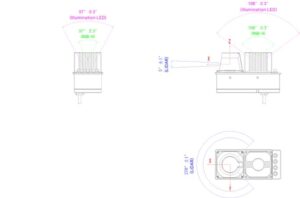
Orientation: It is recommended to mount the module with its long axis perpendicular to the direction of vehicle travel. This orientation aligns the camera’s 108° (H) × 57° (V) field of view to maximize horizontal coverage of the ceiling, capturing more environmental features for stable and reliable localization.

If mounting with the long axis perpendicular is not feasible, positioning the module with its short axis perpendicular to the direction of travel is also acceptable, though it may reduce the effective horizontal field of view for ceiling feature capture.
installation angle v2 pro0206


Installation Angle (Leveling): A near-horizontal angle (typically within ±2°) is recommended and does not require precision leveling tools. If the angle deviation exceeds ±2°, especially in environments with higher ceilings, it may lead to increased positioning errors.

Does the system include a battery?

No. The module is designed for direct integration with the vehicle’s power system, operating on a standard 24V DC supply.

Is the 2D map and positioning data based on the horizontal plane?
Yes. The system outputs all 2D coordinates (X, Y) and the vehicle’s heading (yaw) relative to the assumed horizontal ground plane on which the vehicle operates.
Does your system provide pallet or goods location tracking?

Our system provides the essential core technology to enable pallet or goods location tracking, but it is not a complete, standalone tracking system. Reliable pallet tracking is achieved by combining two key pieces of information:

  1. The vehicle’s precise location (which we provide);
  2. The specific pallet’s identity (which you integrate) with some identification technologies (such as RFID readers or barcode scanners).

Implementation:
Your system logic then fuses the vehicle’s real-time location with the scanned pallet ID at the moment of interaction (e.g., pickup or drop-off) to establish a complete and accurate tracking record.

Important Clarification: Technologies for pallet identification (RFID, scanning, etc.) are not included within our positioning module. These are mature, off-the-shelf components that you select and integrate based on your specific workflow.

If you need support in integrating such technologies with our positioning system, we can refer you to our network of certified integration partners in your region. Please contact our sales or support team for further assistance.

Does the system require a network to function?

Yes. To output real-time positioning data to the vehicle’s controller or a fleet management system, a local network connection is required. The system supports multiple connection methods to suit different deployment environments:

  • Ethernet (wired): The primary and recommended interface for maximum reliability and bandwidth.
  • Wi-Fi (wireless): Integrated Wi-Fi support provides flexibility where cabling is impractical. The module includes a standard antenna port for external Wi-Fi antenna connectivity. For Wi-Fi configuration steps.
  • 5G Connectivity (optional): For wide-area mobility or sites without local Wi-Fi coverage, an optional 5G module can be integrated. The unit provides both a dedicated antenna port and a SIM card slot to support this capability.
What APIs/SDKs are supported for integration (e.g., ROS, programming languages)?
The system supports integration via ROS/ROS 2 packages, a UDP interface for real-time pose data, and HTTP APIs for management and configuration (see the UDP/HTTP Protocol Guide). For large-scale deployments, we also provide customization services to support additional communication protocols and to adapt the Web portal interface and its functionalities as needed.
Does the software provide advanced analytics, like path analysis?

The Intelligent Web Portal is focused on core operational management, including mapping, real-time monitoring, fleet control, and system diagnostics. It logs operational data (such as vehicle trajectories) but does not perform advanced business analytics, such as path optimization, efficiency reporting, or in-depth performance analysis. These higher-level functions are typically handled by upper-layer systems (e.g., WMS or ERP) that consume data via our open APIs.

If you require such advanced analytics capabilities, we can refer you to thirdparty solution partners specializing in logistics analytics and optimization, who can integrate with our system to provide those insights.

Can the V2 Pro system be used outdoors?

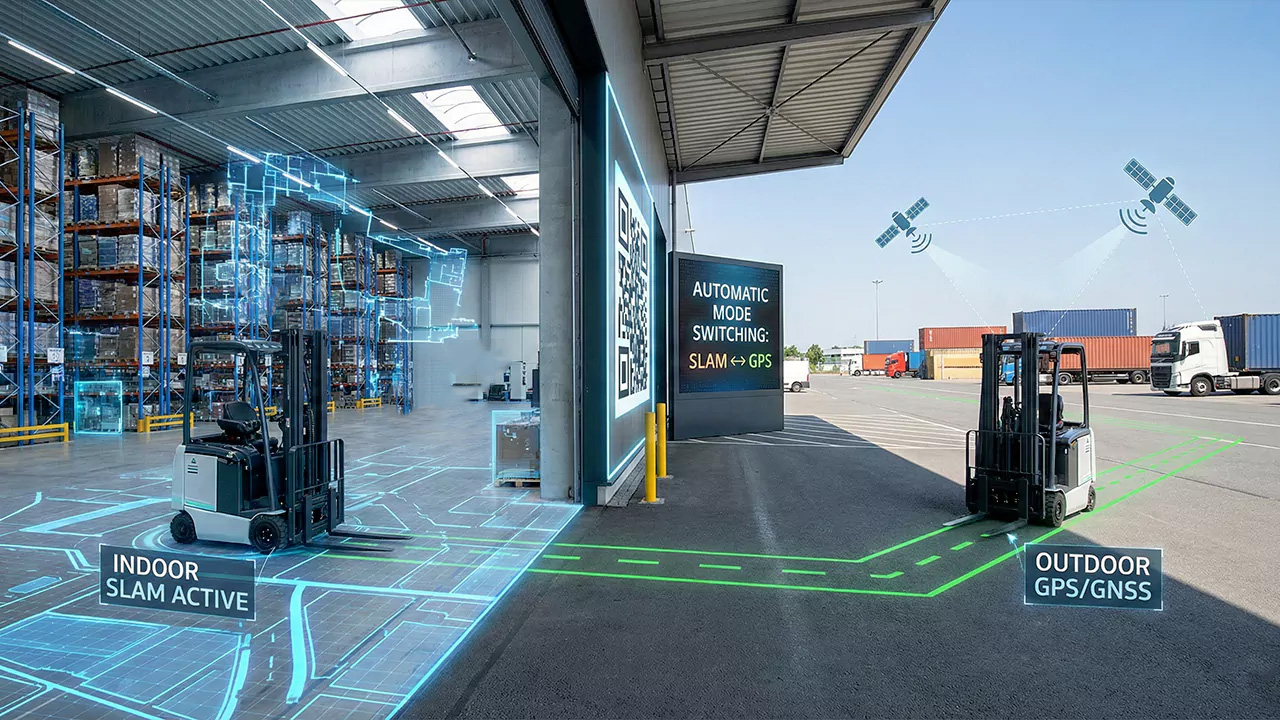
The system is primarily optimized for indoor environments but supports semi-structured outdoor areas (such as sheltered loading docks or covered bays) where 2D LiDAR features remain valid.

For extensive outdoor coverage, V2 Pro can integrate with GPS/RTK modules. By placing unique QR codes at gateways, the system automatically switches between indoor SLAM and outdoor GPS modes without interruption.

What happens if the forklift loses its position due to a power outage or obstruction?

V2 Pro features Instant Relocalization. If positioning is lost:

  1. Auto-Recovery: The system uses “History Memory” to recover its position immediately upon reboot.
  2. QR Assist: In extreme cases (e.g., dragged to a new area while off), simply drive the forklift under a pre-placed QR code. The top-view camera will recognize it and relocalize the vehicle within 2 seconds.
Is the device waterproof and dustproof?

Yes. The V2 Pro hardware is built with an IP54-rated industrial housing, making it resistant to dust ingress and water splashes. It is designed to withstand the harsh conditions of warehouses and factories.

How does lighting affect the system? Can it work in the dark?

Lighting conditions have minimal impact.

  • The 2D LiDAR is active and works independently of light.
  • The Vision Sensor is equipped with built-in auxiliary lighting (fill light) to ensure reliable feature extraction even in low-light or variable lighting environments.
What is the installation height range?

The module is versatile and supports an installation height from 1 meter up to 12 meters. This makes it suitable for various vehicle types, from low-profile AGVs to high-reach forklifts.

Why choose Fusion SLAM (LiDAR + Vision) over traditional UWB/Active RFID tags or pure LiDAR solutions?

V2 Pro combines the best of all worlds to eliminate blind spots:

  1. Vs. UWB/Active RFID tags: V2 Pro is Infrastructure-Free. No expensive anchors to install, no cabling headaches, and no battery maintenance for tags.
  2. Vs. Pure LiDAR: Our added Vision Sensor handles “dynamic” or “featureless” environments (like long corridors or constantly changing stock piles) where pure LiDAR often fails.
  3. Vs. Pure Vision: The LiDAR ensures centimeter-level accuracy (±3cm) and robustness that pure cameras struggle to achieve in poor lighting.
How does V2 Pro achieve "Pallet-Level" visibility compared to standard forklift tracking?

Most RTLS only track the vehicle. V2 Pro tracks the interaction. By integrating with your existing RFID readers on the forklift, our system binds the Pallet ID (from RFID) to the precise X,Y,Z coordinates (from V2 Pro) at the moment of pickup. This allows you to “See Every Pallet” and eliminate blind searching.

How long does it take to deploy the system?

Deployment is rapid. Since no facility modifications (anchors/wiring) are required:

  • Hardware Install: ~30 minutes per forklift (Power & Go).
  • Mapping: One forklift can map a large warehouse in about 1 hour using our “One-Click Mapping” tool.
  • Total Time: You can go from unboxing to full fleet tracking in less than 1 day.
Do I need to modify my warehouse or install servers?

No. V2 Pro is an Edge Computing solution. All localization algorithms run directly on the device. You do not need local servers, heavy Wi-Fi bandwidth, or physical anchors on walls/ceilings.

What is the cost structure compared to traditional solution?

You save up to 70-90% on deployment costs.

  • No Infrastructure Cost: Zero spending on anchors, cabling, or installation crews.
  • Simple Pricing: One-time hardware purchase per vehicle.
Can V2 Pro integrate with my existing WMS/ERP?

Yes. We provide a robust API. The system pushes real-time coordinates (Pose), status, and pallet events directly to your WMS or custom ERP, enabling automated inventory updates and task dispatching.

Is the mapping process difficult? Do I need a SLAM engineer?

No expertise required. A generic operator simply drives the forklift around the facility, and the map is generated and optimized automatically in real-time.

Didn’t find your answer? Talk to an Engineer.

* Required Fields
By submitting this form, you are confirming you agree that Mrdvs Technology to contact you with marketing-related emails or by telephone. MRDVS’s websites and communications are subject to Terms of Use. 
Contact Us
* Required Fields
By submitting this form, you are confirming you agree that Mrdvs Technology to contact you with marketing-related emails or by telephone. Mrdvs’s websites and communications are subject to Terms of Use.