
Pallet Recognition Technology Leads to Efficient Logistics
With the rapid advancement of Industry 4.0 and smart manufacturing, automated warehousing has become a key means for enterprises to improve efficiency and reduce costs. Unmanned forklifts (AGVs) play a vital role in advancing warehouse automation. At the core of their efficient and precise operation lies accurate pallet visual recognition technology.
Automated pallet recognition technology uses advanced visual sensors and image processing technology to provide accurate information on the location and pose of pallets in real time, significantly improving the navigation and handling efficiency of unmanned forklifts.
By applying this technology, unmanned forklifts can overcome problems such as unstable pallet positions and irregular angles, ensuring accurate docking in complex environments, and promoting intelligent and efficient warehouse management.
Other Solutions
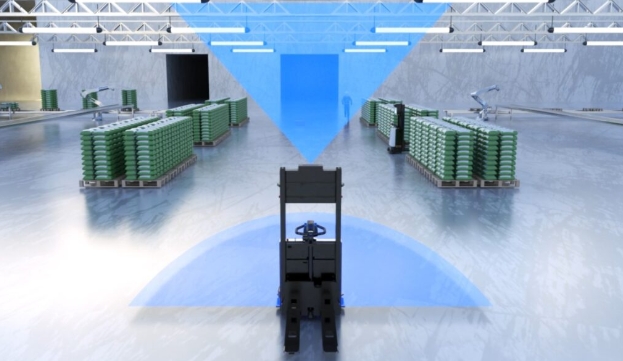


MRDVS PalletPro Pallet Recognition Solution
10 frames per second (10FPS) processing speed
Provide pallet identification results in real time
Easy to deploy, quick to get started
Adapt to more than 90% of pallet types
- Designed specifically for pallet identification needs in complex warehouse environments
- Based on 3D ToF (time-of-flight) vision technology, the 3D camera is combined with intelligent algorithms to accurately identify
- The position and pose of the pallet, adapt to complex light environments without pressure, and is easy to operate.
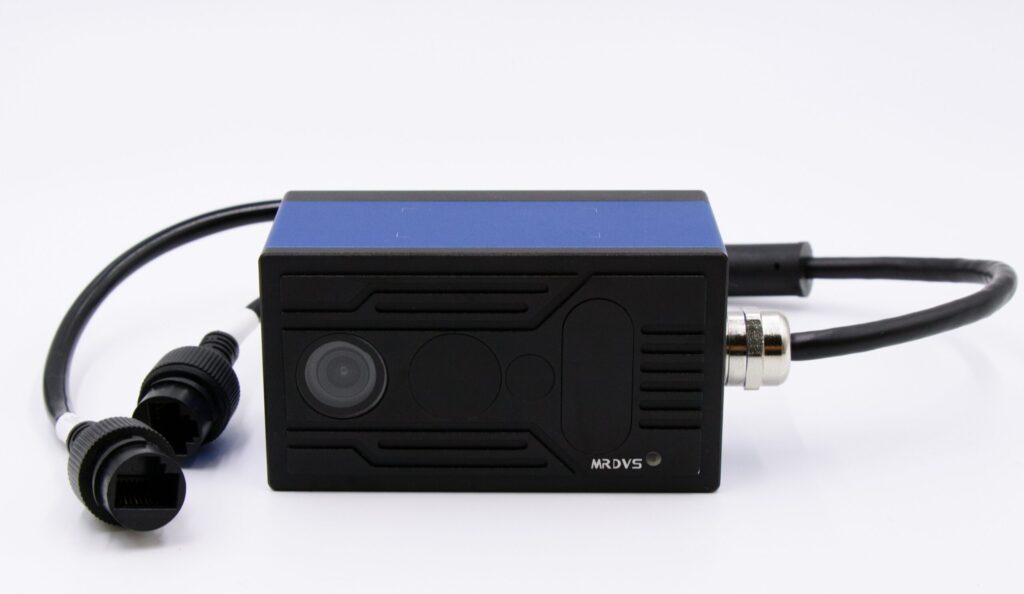
Hardware Support
High-precision self-developed camera
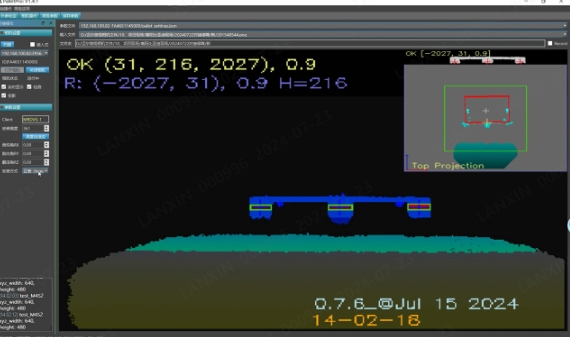
Software Control
Convenient use of intelligent software
Solution Comparison
The PalletPro pallet identification solution has a built-in free standard pallet identification algorithm, so users do not need to invest in development costs or purchase additional algorithms. At the same time, MRDVS is supported by an experienced and dedicated technical team with extensive expertise in batch implementation. This enables the company to deliver efficient, tailored services, fully meet the requirements of rapid deployment, and ensure long-term application stability.
MRDVS Pallet Recognition Solution |
Others |
|
|---|---|---|
|
Algorithm Support & Deployment |
The camera features a mature and highly compatible pallet recognition algorithm, eliminating the need for additional development. It supports multiple interface protocols and enables flexible, efficient deployment. |
No algorithm or only a demo is provided; users are required to develop and optimize themselves. The deployment cycle is long, and the debugging process is complex. |
|
Hardware Technology Roadmap |
Based on 3D ToF technology, it achieves millimeter-level accuracy within a 1-2 meter range and adapts to various complex lighting environments. |
2D LiDAR: Captures only planar information, with poor compatibility and a higher risk of misjudgment. Stereo structured light has significant limitations in accuracy and stability within a 1-2 meter range. |
|
Environmental Adaptability |
Suitable for both indoor and outdoor scenarios, it maintains high performance even in low-light or rapidly changing light conditions. |
Not suitable for outdoor environments and has poor adaptability to low light or strong light variations. |
|
Technical Support Team |
Equipped with a dedicated technical support team with specialized expertise, extensive experience, and mass deployment experience, offering efficient and targeted overall solution support with in-depth understanding of both scenarios and algorithms. |
Provides support only for its own hardware, with limited understanding of scenarios and algorithms, making it difficult to effectively solve problems in complex applications. |
|
Mass Deployment Cases |
Successfully deployed in over 100 AGV (Automated Guided Vehicle) customer groups. |
Few successful industrial-grade mass deployment cases. |
|
Application Expansion & Customization |
Supports expansion to multiple applications, such as automated warehouse pallet position verification and cable drum location recognition. It also offers customization capabilities for non-standard pallets. |
Limited expansion capabilities and no customization development options. |
Solution Advantages
Integration and Efficiency Improvement
By integrating the recognition algorithm into the camera, the PalletPro system can process depth data in real time, greatly improving computing efficiency and response speed. The system can provide real-time pallet recognition results at a processing speed of 10 frames per second (10FPS), ensuring that unmanned forklifts can quickly and accurately grasp and move pallets.

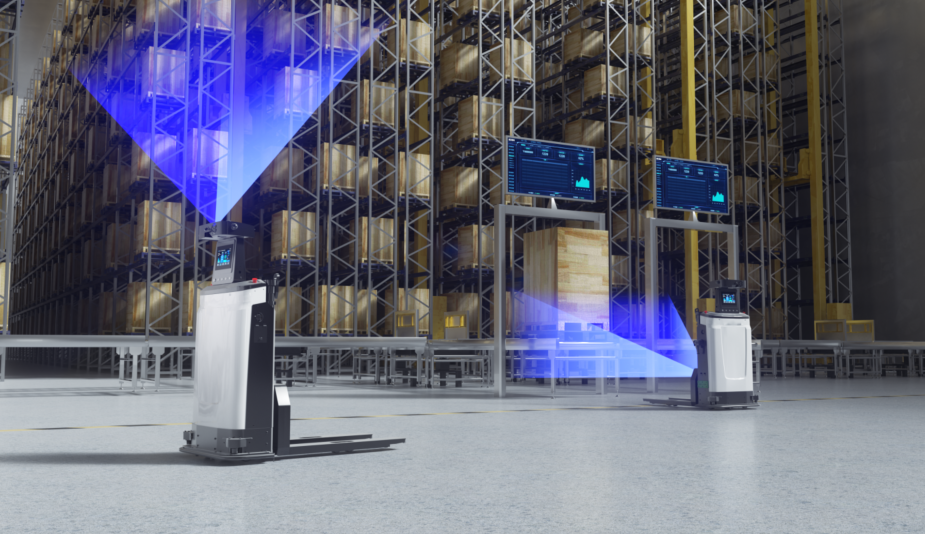
Deployment and Intelligent Connection
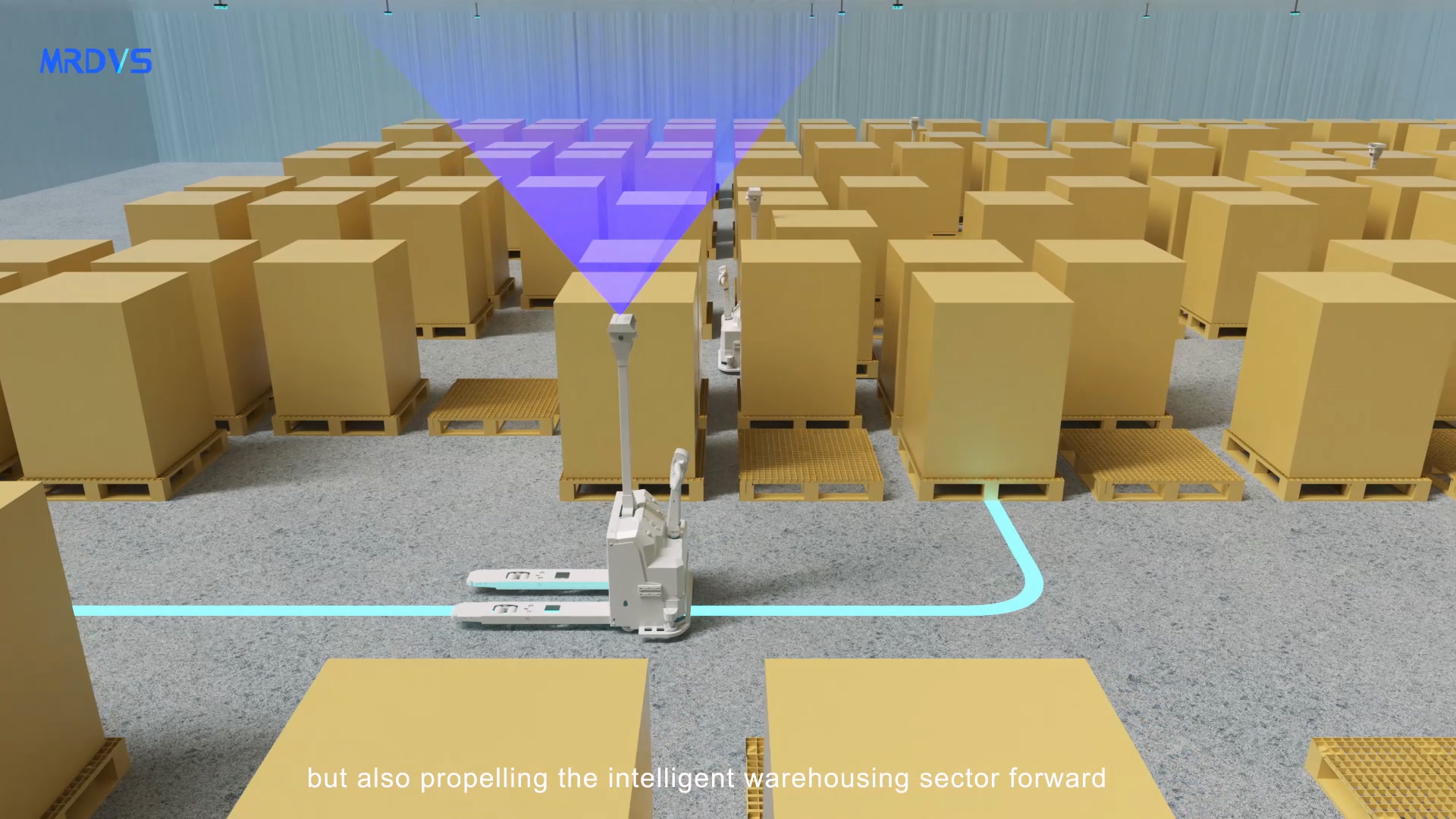
The 3D camera is mounted between the forklift forks. The PalletPro system uses auto-calibration to locate pallets and align forklifts for fast, intelligent docking. Its algorithm recognizes pallet legs and crossbars from depth point clouds, supports two-way, four-way, and stacked pallets, and can be customized for legless or special shapes. It adapts to over 90% of pallet types on the market without extra data training.
Ease of Use and Compatibility
The PalletPro system is easy to deploy, and users can quickly get started through the introductory tutorial without algorithm development experience. The system is compatible with European standard pallets and is suitable for high-level storage, complex stacking and other scenarios. It provides real-time pallet recognition results and can operate stably in various storage environments, ensuring that unmanned forklifts can operate efficiently under a variety of pallet conditions


Support Multiple Interface Communication Methods
In order to provide users with products that are easier to integrate, the solution supports TCP, UDP, CAN, 485, API and other interfaces, and can switch between recognition algorithms and obstacle avoidance algorithms to achieve efficient, accurate and universal pallet recognition automation.
Multi Condition Adaptability and Robustness
For outdoor scenes with strong lighting, the M series ToF depth camera of MRDVS PalletProx is equipped with a 940nm infrared emitter, which can effectively cope with complex lighting conditions. The 940nm wavelength belongs to near-infrared light, which has stronger anti-interference ability in strong light environments and is not easily affected by visible light, thus ensuring the stability and accuracy of depth data.
Outdoor Scene Measurement
Multiple Color Pallet Identification
Hardware Operation

Follow up Installation
The camera is placed on the fork arm root panel at a certain height from the fork arm upper surface (the specific height can be evaluated by contacting the MRDVS pre-sales personnel), as close as possible to the center of the two fork teeth (the left and right deviation should not exceed 5cm), and the camera mirror should be kept vertical to the ground, horizontally centered as much as possible, with no pitch angle, and no other objects in the field of view that interfere with the imaging of the object being detected

Drop Installation
The camera is installed under the fork arm through the tooling. When the fork arm is raised, the camera will fall with the tooling. After the tooling falls completely, it will move with the fork arm. The camera is about 400mm away from the lower surface of the fork arm. When the forklift performs ground pallet recognition, the fork arm needs to be lifted a certain distance to the pre-docking position (photo point) and then trigger visual docking.
The same is true for docking of pallets on the rack. When the forklift is lifted to the predocking position, the distance between the bottom of the pallet legs on the shelf and the optical center of the camera must be ensured before visual recognition is triggered. The camera is kept as close to the center of the two forks as possible (the left and right deviation does not exceed 5cm) and the camera mirror is kept vertical to the ground, with no pitch angle as much as possible, and no other objects in the field of view that interfere with the imaging of the object being inspected.
Installation Instructions
Pallet Identification and Docking
The MRDVS M series camera is installed between the two fork arms of the forklift. When the forklift receives a task from the dispatch system, it moves to the docking point in front of the pallet. At a distance of about 2 meters from the front edge of the pallet, the forklift performs preliminary positioning, and the 3D vision system outputs the position information to help the forklift adjust the angle deviation. The forklift continues to move forward to a position of 1.5 meters for precise positioning. The 3D vision system outputs the pallet position information again to help the forklift adjust the left and right deviations to ensure the accuracy of the docking process.

Support 2 Docking Modes
Double docking mode
Far-end positioning: After receiving the dispatch task, the forklift moves to the docking point and enables the camera to identify the pallet data. Through the motion control system, the forklift adjusts the angle and lateral offset within the range of 1,800mm to 2,800mm from pallet.
Near-end verification: When the fork tip is about 200mm away from the front edge of the pallet, the camera recognition data is obtained again to verify whether the docking accuracy meets the fork-picking requirements. If it meets the requirements, the forklift will pick up the pallet, otherwise it will adjust it on the spot before picking up the pallet.
Real time docking mode
The real time docking mode dynamically adjusts the position by continuously acquiring camera recognition data. When the forklift moves to about 200mm from the front edge of the pallet, the system makes fine adjustments and completes the fork pick-up operation. This mode relies on the timestamp of the data to update to avoid incorrect adjustments caused by delays.
Successful Cases
More Application Scenarios
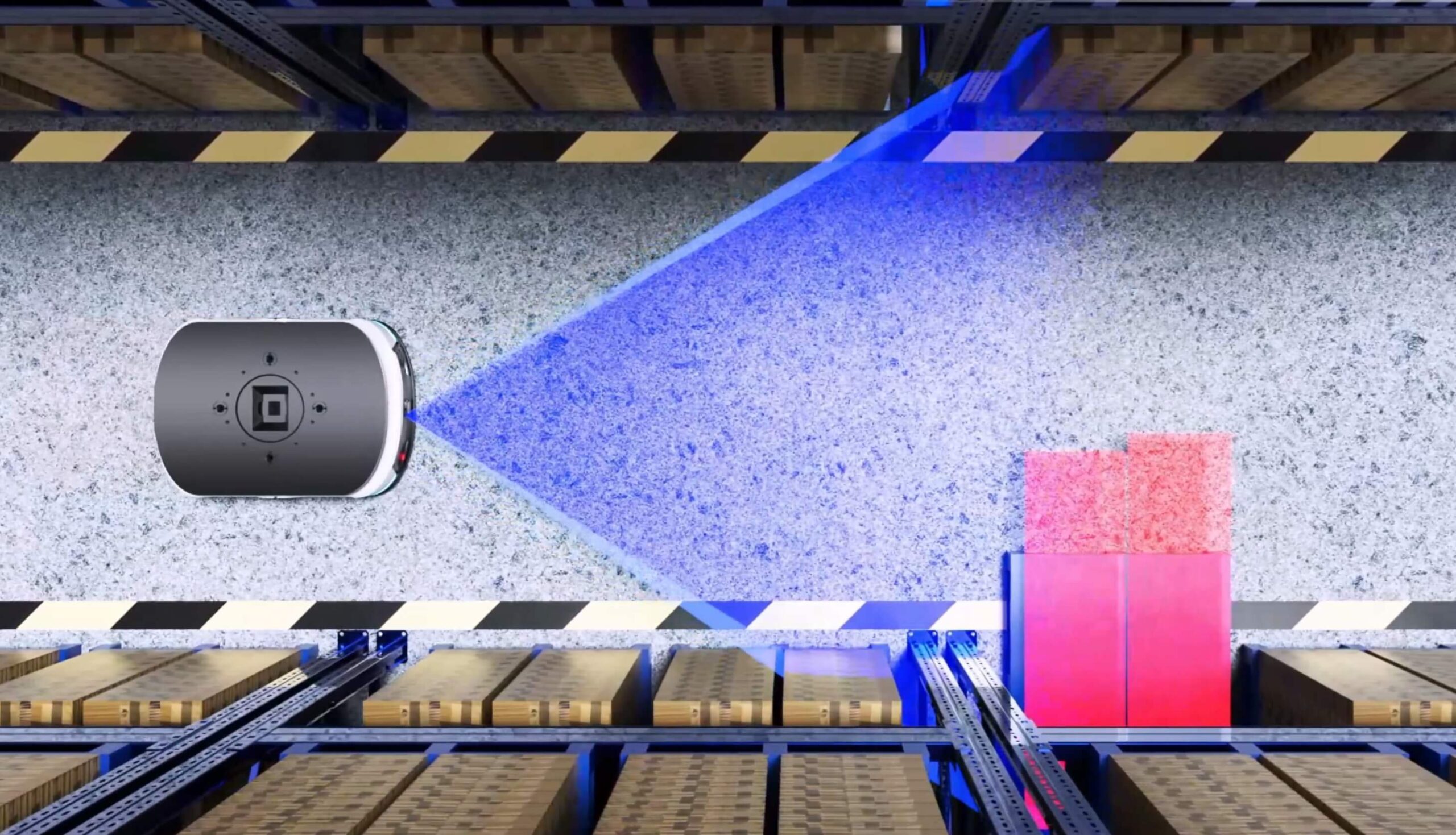
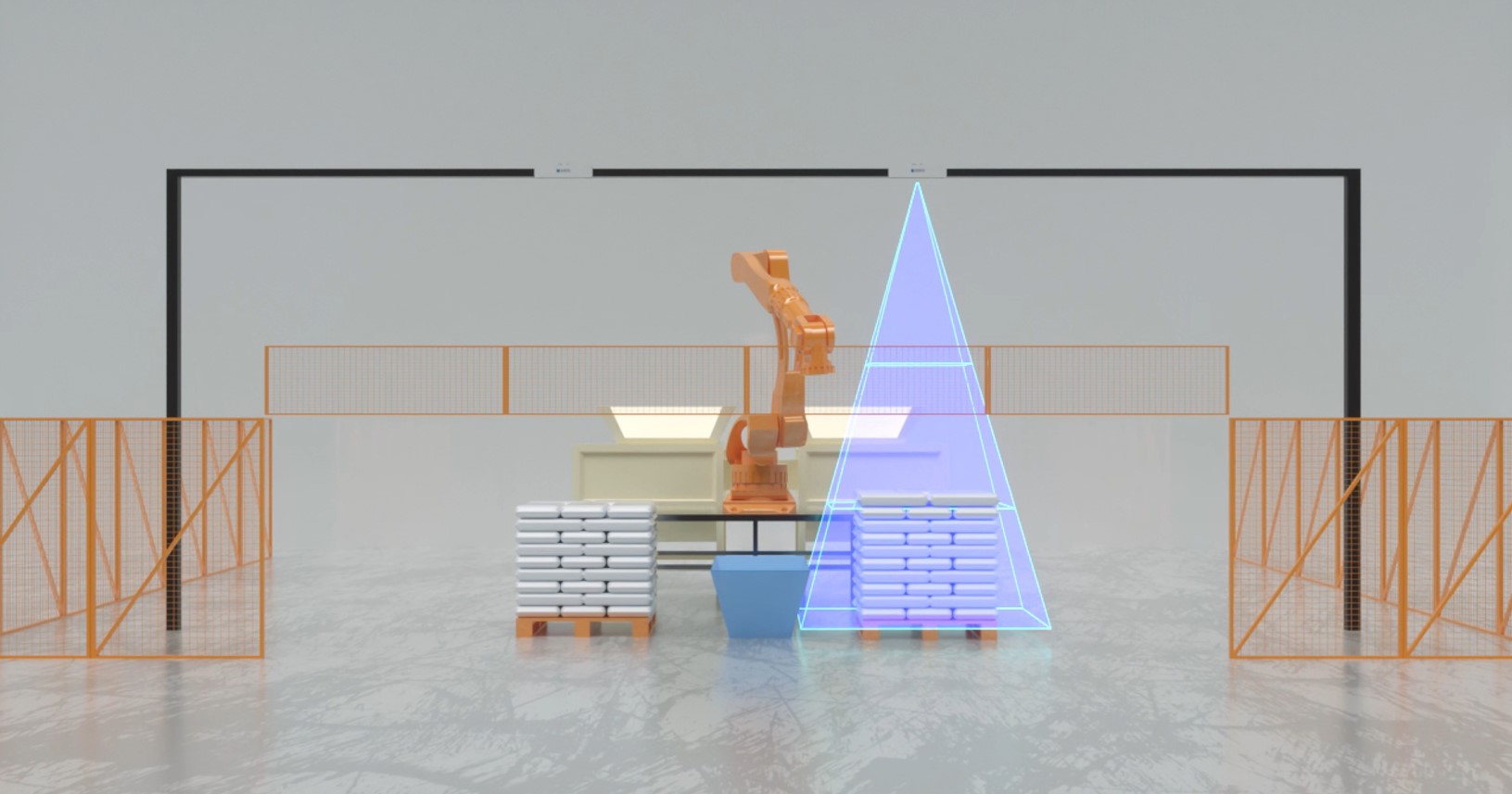
When the system detects that there is a risk of the pallet in the vertical warehouse being offset or docked inaccurately, the system will feedback to the stacker control system and automatically suspend the fork-picking operation to avoid misoperation or potential safety risks caused by position deviation.

M Series ToF Cameras
The MRDVS M-Series depth sensor, featuring ToF camera technology, is designed to address the challenges posed by various lighting conditions, object texture, and the requirement for real-time object detection. This time of flight camera is particularly effective in both indoor and outdoor settings. It is optimized for target working distances of up to 5 meters. The M-Series 3D vision camera distinguishes itself with its compact design and efficient performance, making it an ideal choice for a range of applications where these factors are critical.
If you have any questions, please feel free to contact us
- service@mrdvs.com
- +86 13370882355 (WhatsApp)

 浙公网安备33050202000925号