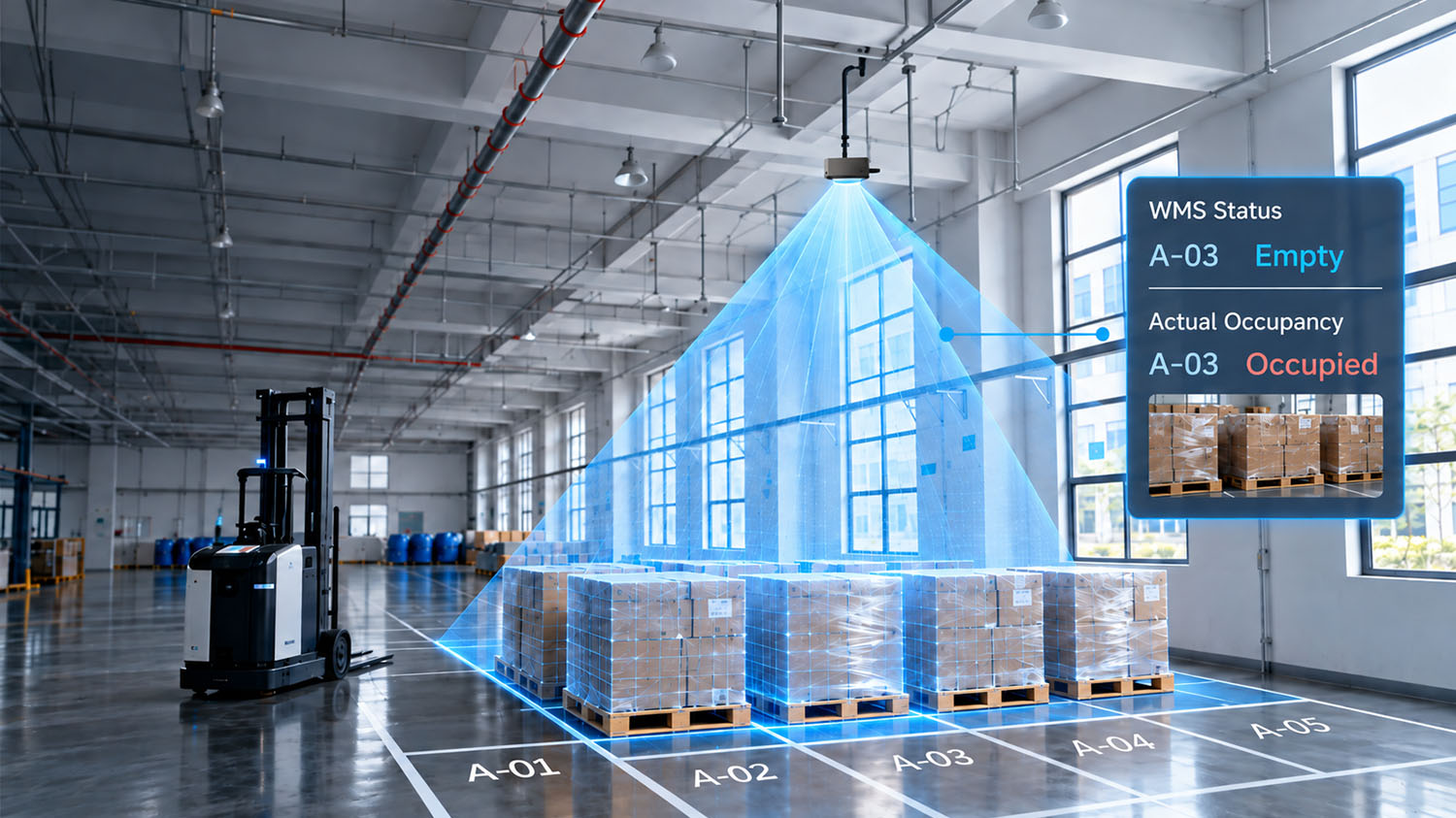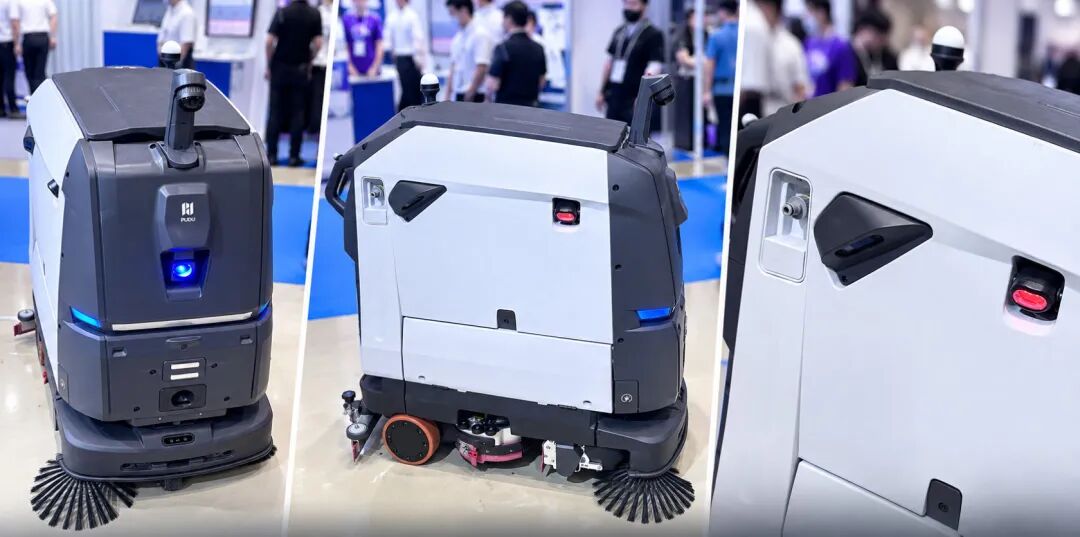

Reliable warehouse obstacle detection requires more than distance measurement. Mobile robots must detect objects with different heights, shapes, colours, textures, and reflectivity under changing lighting conditions.
MRDVS S-Series depth cameras use direct time-of-flight (dToF) sensing to generate 3D depth information for AGV forklifts and AMRs. In a July 2026 performance test, MRDVS evaluated how the S11 handled black, reflective, overlapping, and strongly backlight targets.
Detecting obstacles reliably in a working warehouse is not simply a matter of measuring distance.
Warehouse loads are rarely uniform. Pallets, cages, and stock may be matte black, wrapped in reflective film, or worn to a texture-less grey. Any of these surfaces can challenge a sensor tuned on a laboratory test target.
The working environment introduces additional variables:
The practical requirement is therefore not only to measure distance, but also to produce usable 3D information across changing targets and environmental conditions.
Direct time-of-flight technology emits ultra-short pulses of infrared light—typically on a nanosecond scale—and records the interval (Δt) between emission and the return of the reflected signal. Distance is derived directly:
Because the measurement is a direct timing of the returned pulse, each pixel within the field of view can return a depth value largely independently of the target’s colour or texture. Active stereo, by contrast, projects a pattern and triangulates depth from how that pattern deforms across two lenses—a process that depends on having sufficient visual information for feature matching.
The S-Series implements this principle with three hardware choices that matter in the field:
MRDVS attributes the results observed in the tests below to this underlying sensing method.
Camera used during the test:
The test programme examined four types of targets and scenes:
The test focused on depth-image completeness, edge definition, behaviour around overlapping objects, missing point-cloud data, and noise.
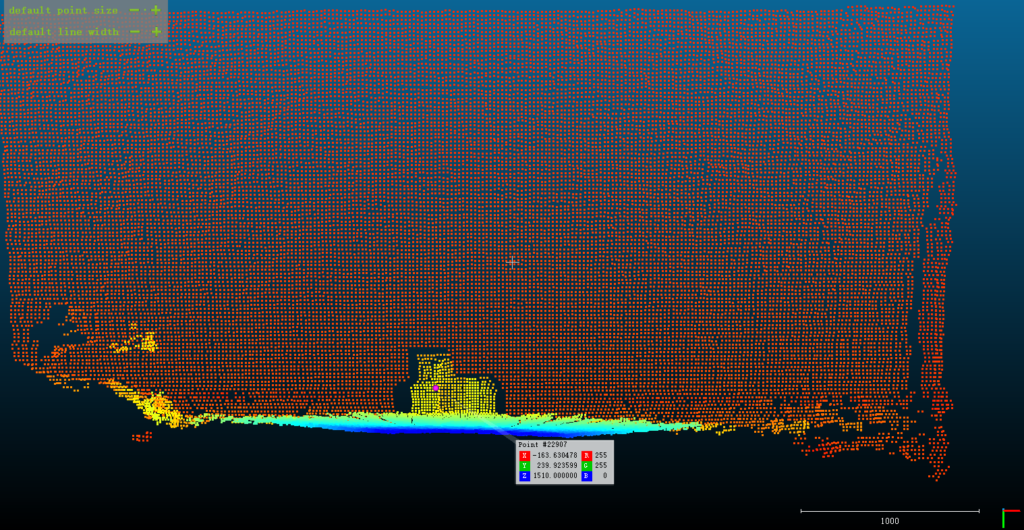
The first test placed a black object close to a white wall.
This is a simple but revealing scene because the camera must distinguish two neighbouring surfaces using their depth difference alone, even though the black object provides limited visual texture.
The results show that the S11 produced a complete depth image, which was then transformed into a 3D point cloud image with clearly defined edges separating the objects from the wall. As shown above.
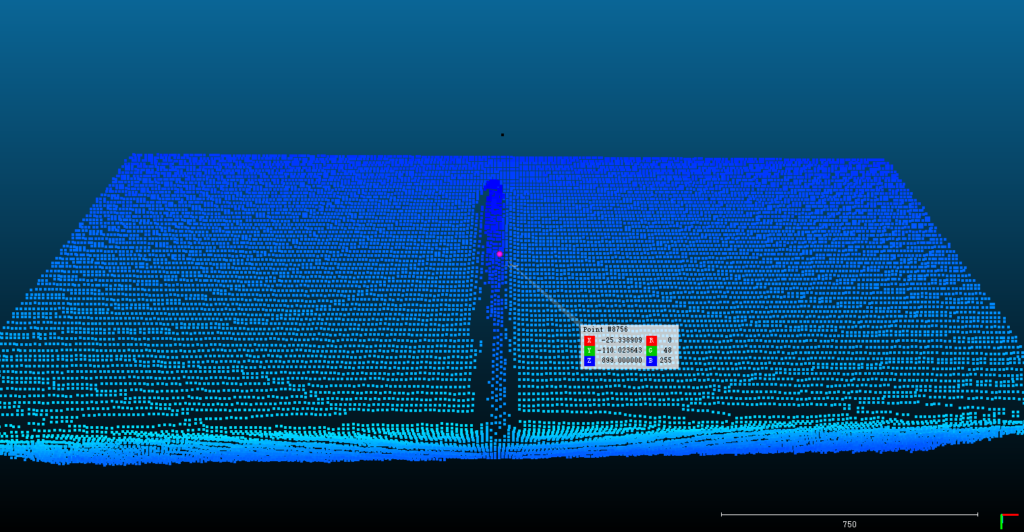
The second test evaluated a reflective column.
MRDVS reports that the S11 produced a complete depth image, which was then transformed into a point cloud image without missing or dispersed data around the edges of the column.
This test was intended to examine how the dToF camera handled a target that could produce challenging reflections—a common condition where loads are shrink-wrapped or stored in metal cages.
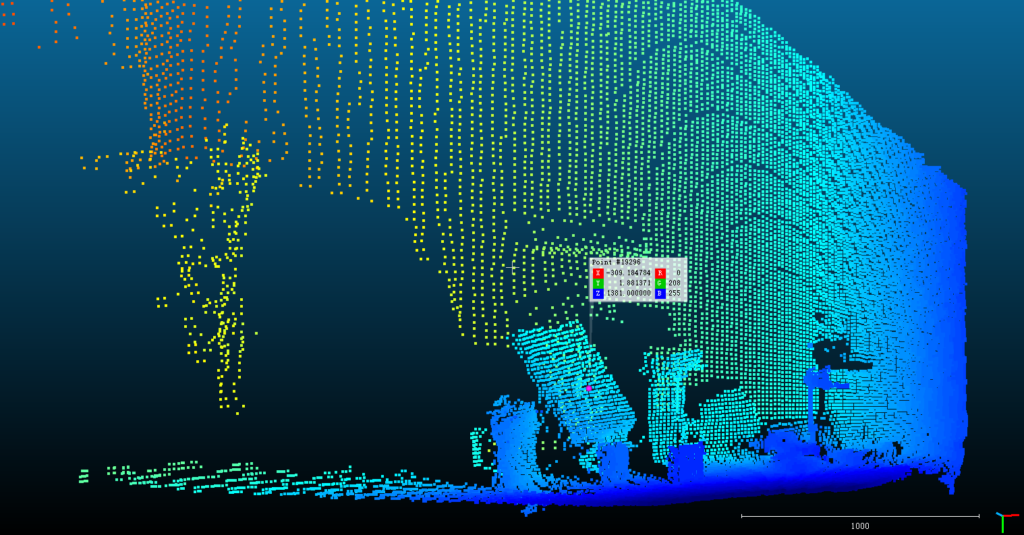
The third test used an indoor scene containing multiple stacked objects positioned at different depths.
MRDVS reports that the S11 retained detail throughout the scene.
For warehouse obstacle detection, retaining depth information around overlapping objects is relevant because pallets, loads, racks, and mobile equipment may partially block one another. A gap in the point cloud at an overlap boundary is precisely where a robot needs data to decide whether a gap is traversable.
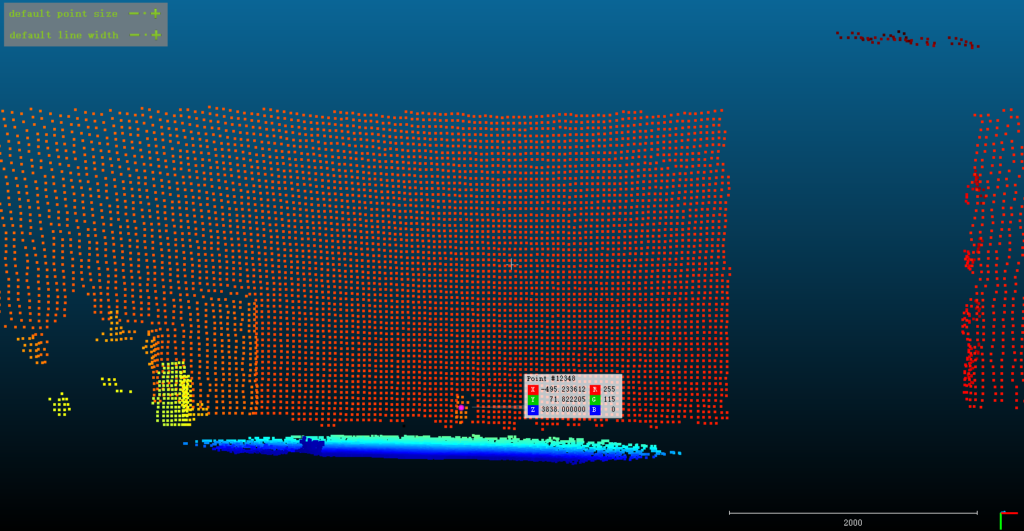
The fourth test isolated the lighting variable. Four normal-reflectance objects were positioned behind a strong light source aimed toward the camera and approximately 4 m from it, so that the illumination fell on the lens rather than on the targets.
Backlighting of this kind reproduces one of the most common causes of depth failure in real deployments. An AGV forklift crossing a bay door moves from roughly 200 lux indoors to tens of thousands of lux outdoors within a single vehicle length, often facing directly into the light as it does so, and the sensor has no opportunity to be re-tuned between the two conditions.
MRDVS reports that under these conditions the S11 produced a complete depth image across the full field of view, which was then transformed into 3D poinst cloud image with all four objects clearly separated from one another and from the background.
| Test Scene | MRDVS S11 (dToF) |
| Black objects close to a white wall | Complete point cloud image with well-defined separation between the surfaces |
| Reflective column | Complete point cloud image without missing or dispersed edge data |
| Stacked objects at different depths | Detail retained throughout the scene |
| Four objects against a strong backlight | Complete point cloud image, with all four objects clearly separated |
Detection quality only translates into safety if the result reaches the vehicle controller in time.
MRDVS reports typical end-to-end latency of 70 to 100 milliseconds for the S11 under standard operating conditions, and a minimum working distance of approximately 10 cm (4 in).
The minimum working distance is relevant when obstacles need to be detected close to the path of an AGV forklift—for example, a pallet foot or a kerb immediately ahead of the forks. Actual deployment performance also depends on sensor placement, vehicle geometry, detection-zone configuration, and operating speed.
Obstacle detection is only one part of a complete mobile-robot safety and control system. The S-Series ships with a real-time obstacle avoidance algorithm that runs directly on the camera, with no external industrial PC required.
Highlights of the Built-In Obstacle Avoidance Solution
Because the zone geometry can be configured as a rectangular or cone-shaped volume, the detection area can follow the vehicle’s direction of travel instead of relying on a single fixed sensing radius.
Beyond core zone-based avoidance, the S-Series supports higher-tier perception for cluttered and collaborative environments.
Warehouse obstacle detection must account for more than distance. Target colour, texture, reflectivity, overlap, lighting, sensor placement, and vehicle movement all affect the depth information available to an AGV or AMR.
The July 2026 test described here shows how the MRDVS S11 handled four deliberately difficult scenes—black objects against a white wall, a reflective column, overlapping stacked loads, and four objects against a strong backlight. Across all four scenes the S11 returned complete depth images with clearly defined edges.