
Most automated warehouses I’ve walked into over the past years have a similar recurring failure mode.
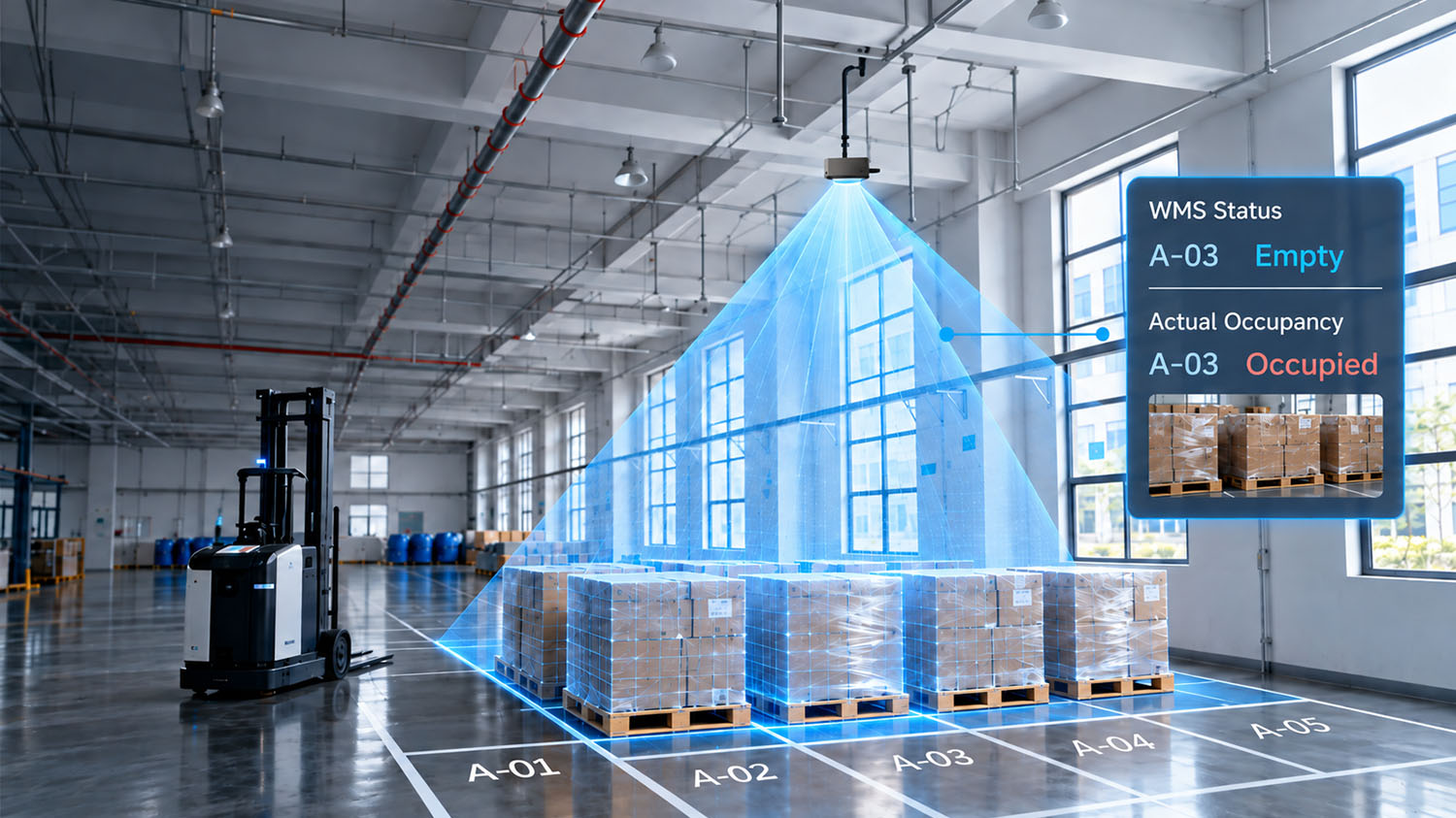
The WMS says the floor slot is empty. The AGV commits to a drop-off. The AGV arrives. The slot isn’t empty.
Then the lane stops. The operator gets paged. The workaround begins.
This isn’t a software bug. It’s a sensing gap.
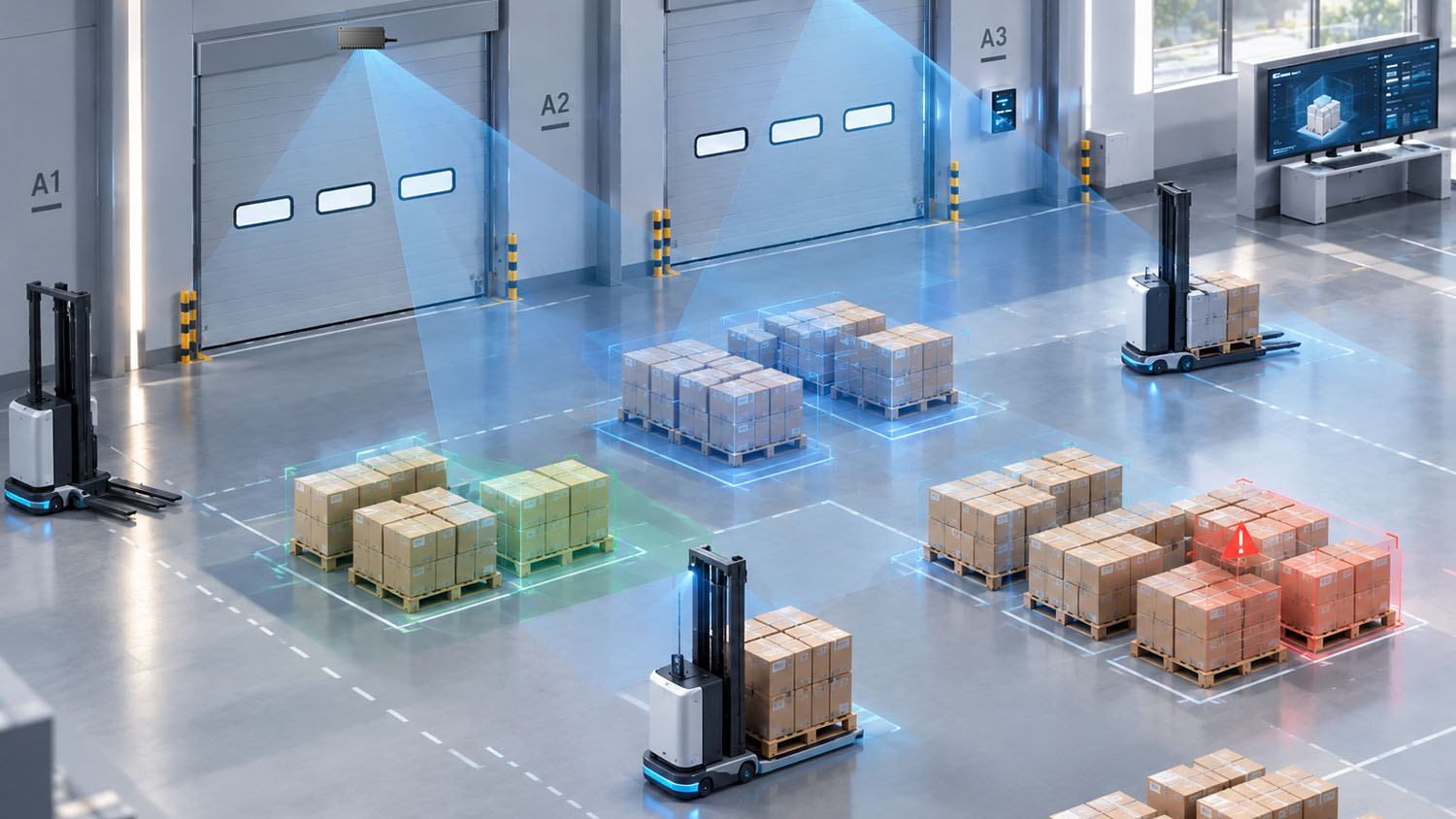
The WMS only knows what it’s been told. It doesn’t see. And when you run mixed fleets, automated vehicles alongside manual forklifts, the gap widens fast. Forklift operators don’t always scan. Shift handoffs don’t always sync. And by the time the discrepancy surfaces, you’ve already lost meaningful throughput.
Most deployments I’ve reviewed use one of two approaches:
Checks one spot per slot. In theory it works. In practice, pallets shift off center during transport. The beam misses, the sensor reports “empty,” and the AGV still hits an obstacle. I’ve seen this fail in multiple sites with the exact same pattern.
Give you a color image. No depth. Under warehouse lighting, dark pallets blend into the floor. Shadows from racking cause false positives. In one site I visited, error rates rose noticeably during afternoon shifts when sunlight hit the skylights. That’s not reliability.
Both approaches force the WMS to infer occupancy from incomplete data. And in my experience, inference without direct observation is where automation projects go to die.
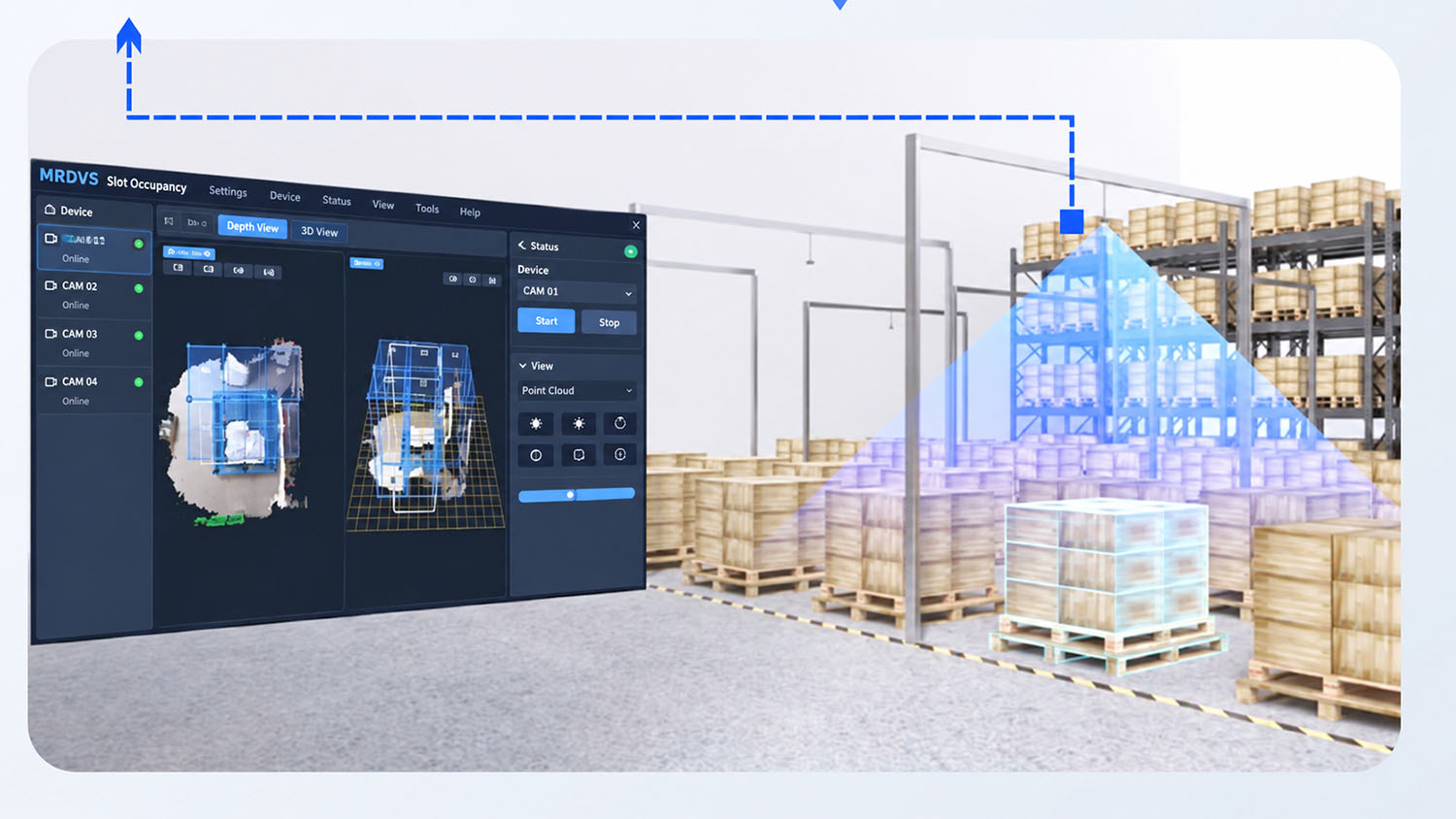
We switched to overhead RGB-D cameras – colour + depth map in a single stream.
The difference isn’t just “better detection.” It’s a fundamental shift:
If you’re specifying floor slot sensing today, here’s my rule of thumb:
3D vision with onboard processing isn’t the expensive option anymore. It’s the safe option. And in this industry, a safe option that cuts deployment time and eliminates last-mile surprises is the one that keeps your client’s confidence intact.
The goal isn’t a smarter WMS. It’s a WMS that stops guessing.